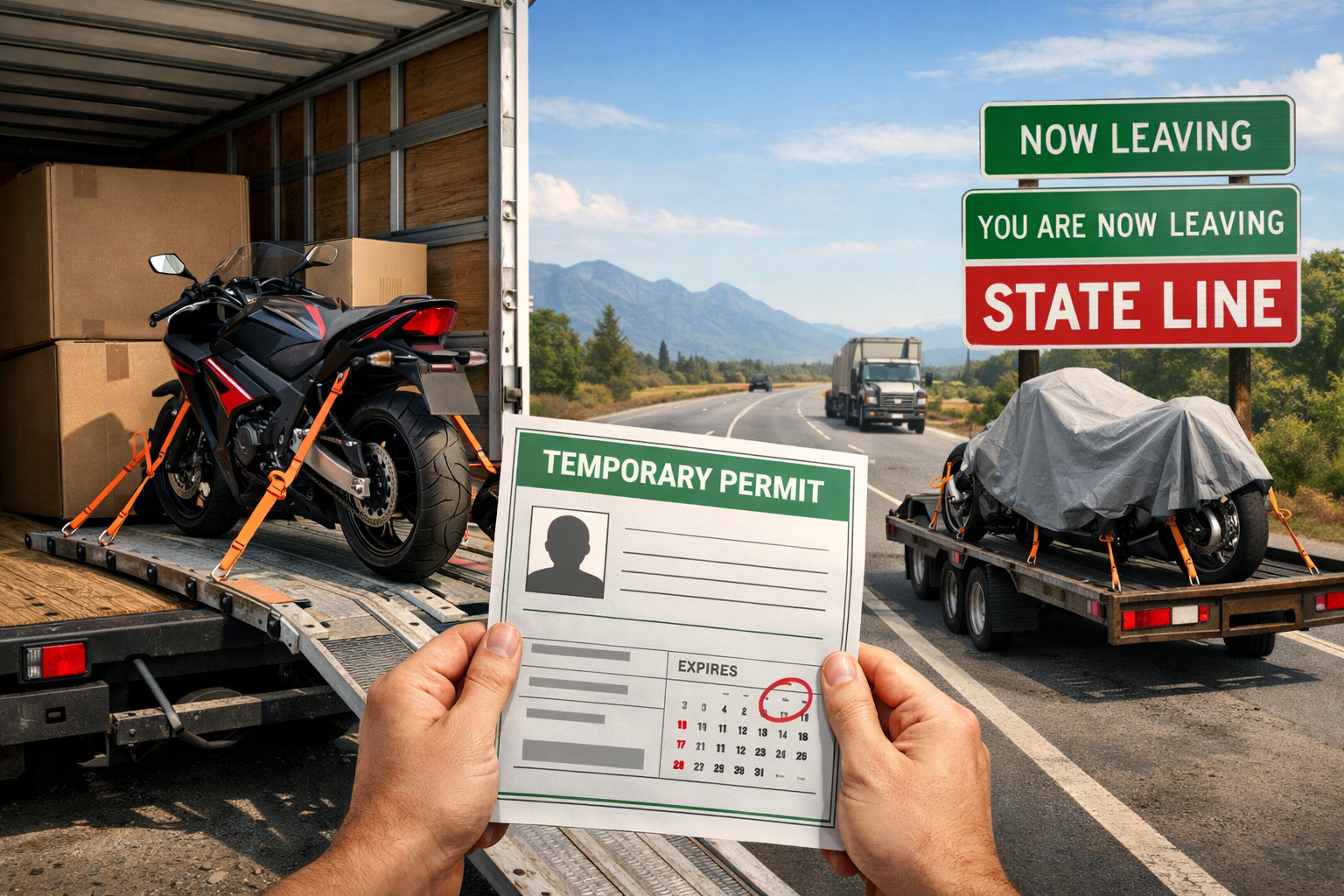
Relocating your bike across state borders involves more than just physical transportation—it requires navigating India’s complex vehicle permit regulations. Many first-time users of bike shifting services encounter unexpected delays at state border checkpoints due to permit issues, turning what should be a smooth relocation into a frustrating ordeal. Understanding temporary permit requirements and the proper legal procedures ensures your two-wheeler reaches its destination without complications, fines, or unnecessary police verifications.
What Are Temporary Permits for Bike Shifting Services
Temporary permits, officially known as “tourist permits” or “temporary registration permits,” are legal authorizations allowing vehicles registered in one state to be driven or transported through another state for a limited period. When using bike shifting services for interstate relocation, these permits become crucial for legal compliance during transit and immediate post-delivery usage.
Under the Motor Vehicles Act, any vehicle entering a new state must obtain appropriate permits to operate legally. While professional vehicle shifting service providers handle transportation, the permit responsibility ultimately rests with the vehicle owner. Many people mistakenly believe that once their bike is loaded onto a carrier, permit concerns disappear—this misconception leads to complications when the bike arrives at the destination and you want to ride it before completing full registration transfer.
The confusion intensifies because regulations vary between states. Some states require temporary permits for any vehicle entering their territory, while others offer grace periods of 7-30 days before permits become mandatory. Gujarat, Maharashtra, and Karnataka enforce strict permit requirements, while states like Rajasthan and Madhya Pradesh offer more lenient initial periods.
Legal Methods for Temporary Permit Acquisition Through Bike Shifting Services
Understanding legitimate permit acquisition methods protects you from legal complications while ensuring your bike remains operational immediately upon delivery. Professional bike shifting services often provide guidance on these processes, though the application responsibility belongs to the vehicle owner.
RTO Temporary Permit Application: The most straightforward legal method involves applying for a temporary permit at your origin state’s RTO before transportation begins. This permit typically costs ₹200-₹500 and remains valid for 30-45 days, giving you sufficient time to complete permanent registration transfer at the destination. Visit your local RTO with your Registration Certificate (RC), insurance documents, identity proof, and address proof for the new location. The RTO issues a temporary permit allowing your bike to operate in other states during the specified validity period.
Online Permit Applications: Several states now offer online temporary permit applications through the Parivahan Sewa portal, eliminating the need for physical RTO visits. Log into the portal, select the temporary permit option, upload required documents, pay the nominal fee, and download the digital permit. This document has equal legal validity as physical permits and should be carried during transit and initial usage in the new state.
Transport-Specific Documentation: When using vehicle shifting service providers, carriers typically possess All-India Tourist Permits for their transport vehicles, legally authorizing them to carry bikes across state borders without additional permits for the bikes themselves during transport. However, this protection applies only while your bike remains on the carrier—once delivered, you need your own permit for riding.
Grace Period Utilization: Several states offer automatic grace periods for newly arrived vehicles before mandatory registration transfer. For example, if relocating to Bangalore, Karnataka allows 30 days for registration transfer without requiring immediate temporary permits. During this period, you can legally ride your bike using your existing registration, provided you’ve initiated the NOC (No Objection Certificate) process from your original RTO. Research your destination state’s specific grace period policies and utilize them strategically.
Understanding Police Verification During Bike Shifting Services
Police verification at state border checkpoints aims to prevent vehicle theft, smuggling, and illegal interstate transport. Professional bike shifting services navigate these checkpoints regularly and understand the verification process, but knowing what to expect helps you prepare appropriate documentation and avoid delays.
Standard Verification Procedures: At border checkpoints, police verify the carrier’s commercial transport permit, check each bike’s registration documents against physical chassis and engine numbers, and confirm that owners have authorized the transport. Legitimate carriers maintain comprehensive documentation for each bike they transport, presenting these systematically during inspections to minimize delay.
Documentation Requirements: Police typically request your bike’s original RC, valid insurance certificate, PUC (Pollution Under Control) certificate, and transport authorization letter signed by you authorizing the specific carrier to transport your bike. Professional vehicle shifting service providers collect these documents during pickup and return them upon delivery. Ensure your insurance remains valid throughout the transit period, as expired insurance can cause checkpoint detention regardless of other documentation.
Owner Identity Verification: Increasingly, border police conduct telephonic verification, calling bike owners to confirm they’ve authorized the transport. When using bike shifting services, inform them of your preferred contact number and keep your phone accessible during the expected transit period. Missed verification calls can delay your bike by hours or even days at checkpoints.
Digital Verification Systems: Modern checkpoints use Vahan database access to verify vehicle registration details digitally. This system cross-references the physical vehicle’s chassis and engine numbers against central registration databases, identifying stolen vehicles or those with pending legal issues. Ensure your bike has no pending traffic challans before transport, as these can trigger additional scrutiny during verification.
Common Mistakes That Trigger Extended Police Verification
Understanding what causes verification delays helps you avoid these situations when planning your bike relocation. Many issues stem from documentation oversights that seem minor but create significant complications at checkpoints.
Mismatched Documentation: If your RC shows one address but your authorization letter shows another without explanation, police may suspect fraudulent activity. When you’ve recently moved, carry additional documentation like your new rental agreement or employer transfer letter explaining the relocation context.
Modified Bikes Without Approval: Aftermarket modifications like exhaust changes, handlebar alterations, or engine modifications without RTO approval cause verification delays. Police must determine whether modifications are legal and whether the bike’s current state matches its registered specifications. If your bike has modifications, carry RTO approval certificates or be prepared for potential complications.
Unclear Transport Authorization: Generic authorization letters without specific details trigger suspicion. Your authorization should clearly mention the bike’s registration number, chassis and engine numbers, carrier company name, transport vehicle number, origin and destination locations, and transport dates. Professional bike shifting services provide authorization letter templates, but verify these contain all necessary details.
Expired or Missing PUC Certificates: Pollution certificates expire every six months, and many owners overlook renewal before relocation. Checkpoints increasingly verify PUC validity, and expired certificates can cause detention. Renew your PUC before scheduling bike shifting services, even if it’s only a few weeks from expiry—the small cost prevents potentially large delays.
Working With Bike Shifting Services for Smooth Permit Management
Choosing the right vehicle shifting service provider significantly impacts how smoothly permit and verification issues are handled. Experienced providers understand regional permit requirements and checkpoint procedures, navigating these efficiently while keeping you informed throughout the process.
Pre-Transport Consultation: Reputable bike shifting services discuss permit requirements during initial consultations, advising whether you need temporary permits based on your specific origin and destination states. They should explain the grace period availability, recommend timing for permit applications, and clarify documentation requirements. Providers who dismiss permit discussions or claim “we handle everything” without specifics may lack comprehensive understanding of legal requirements.
Documentation Support Services: Premium vehicle shifting service providers offer documentation assistance, helping you prepare proper authorization letters, advising on temporary permit applications, and even coordinating with RTO agents who can expedite permit processing. While these services cost extra (typically ₹500-₹2,000), they’re valuable for first-time interstate movers unfamiliar with RTO procedures.
Checkpoint Coordination: Professional carriers maintain direct communication with border checkpoint authorities, sometimes scheduling passage during less congested times to minimize verification delays. They also carry comprehensive documentation for all bikes being transported, presenting organized paperwork that facilitates quick inspection and clearance.
Real-Time Updates: Choose bike shifting services offering GPS tracking and regular communication updates. When your bike approaches or passes through border checkpoints, timely notifications allow you to keep your phone accessible for potential verification calls and provide peace of mind about progress.
State-Specific Permit Requirements for Popular Routes
Different states enforce varying permit requirements, and understanding these helps you prepare appropriately based on your specific relocation route. Here are permit considerations for commonly used bike shifting routes:
Delhi to Bangalore: This route crosses multiple states (Haryana, Rajasthan/Madhya Pradesh, Maharashtra, Karnataka), each with different requirements. Karnataka requires temporary permits or immediate NOC initiation. Professional bike shifting services navigate this complexity by ensuring your documentation satisfies the strictest state’s requirements (Karnataka in this case), automatically satisfying others.
Mumbai to Hyderabad: Crossing from Maharashtra to Telangana involves stringent verification at state borders. Both states actively enforce permit requirements, making temporary permits advisable even though Telangana offers a 30-day grace period. The Solapur-Gulbarga checkpoint sees heavy verification activity.
Chennai to Kolkata: This east coast route traverses Andhra Pradesh, Odisha, and West Bengal. West Bengal is particularly strict about incoming vehicle documentation, requiring either temporary permits or clear evidence of NOC processing from the origin state. The Andhra-Odisha border checkpoint near Ichchapuram conducts thorough verifications.
Ahmedabad to Pune: Despite being a shorter interstate route, Gujarat-Maharashtra border checkpoints actively verify vehicle documentation. Maharashtra’s strict enforcement makes temporary permits highly recommended, even though the actual transit distance is relatively short.
Timeline Planning for Permits and Bike Shifting Services
Coordinating permit acquisition with bike shifting services scheduling ensures legal compliance without delaying your relocation. Ideally, apply for temporary permits 7-10 days before your scheduled transport date, allowing time for processing while ensuring the permit remains valid for most of your 30-45 day validity period after delivery.
If using online permit applications, apply 3-5 days before transport, as digital permits typically process within 24-48 hours. However, build buffer time for potential technical issues or document verification delays.
Schedule your bike shifting services only after confirming permit approval or after thorough research confirms your destination state offers adequate grace periods. Rushing transport before securing proper documentation creates unnecessary legal risks and potential riding restrictions after delivery.
Cost Considerations for Permits and Legal Compliance
Budgeting for permit-related costs alongside bike shifting services ensures you’re financially prepared for complete legal compliance. Temporary permits cost ₹200-₹500 depending on the issuing state and validity period. If hiring RTO agents for assistance, expect ₹500-₹1,500 in service charges beyond official fees.
Some vehicle shifting service providers offer bundled packages including documentation assistance, permit application support, and checkpoint coordination for ₹1,000-₹3,000 beyond basic transport costs. While this increases immediate expenses, it saves time and reduces the risk of costly delays or legal complications.
Factor in potential costs of non-compliance as well. Operating without required permits can result in fines of ₹5,000-₹10,000, potential vehicle seizure requiring ₹2,000-₹5,000 in release fees and legal processing, and time lost dealing with legal complications worth far more than proactive permit costs.
Successfully relocating your bike across state borders requires understanding temporary permit requirements and following proper legal procedures. By working with knowledgeable bike shifting services, maintaining comprehensive documentation, and proactively obtaining necessary permits, you ensure smooth transport, quick checkpoint clearances, and immediate legal riding capability in your new location without complications or unnecessary delays.