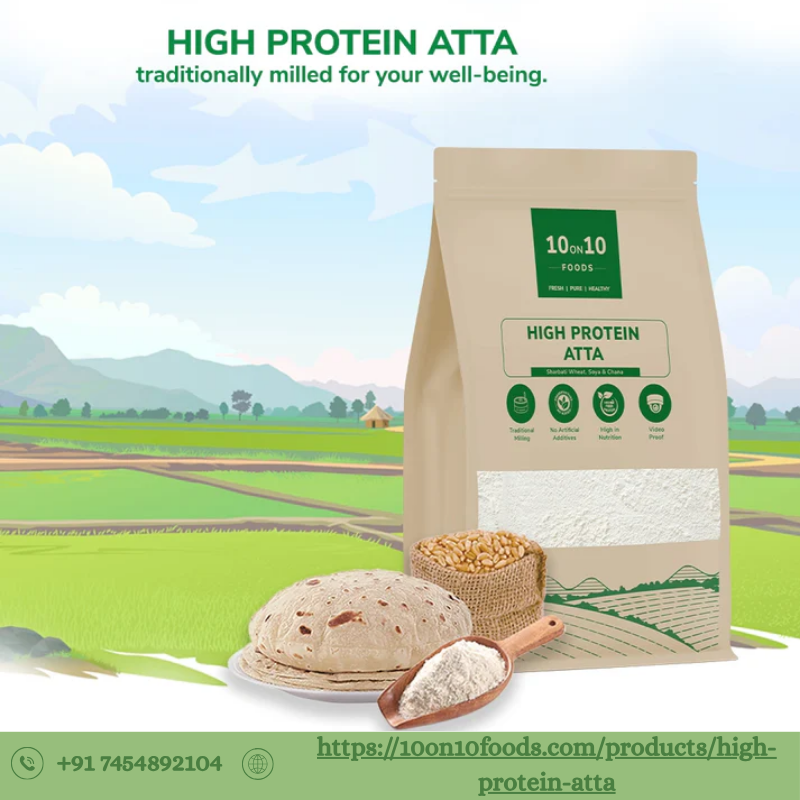
High Protein Atta is becoming a popular choice in many kitchens because of its grain selection, texture and the way it behaves during cooking. One of the biggest questions users ask is:
Does protein atta need more or less water than regular atta?
The simple answer: Most high protein atta blends generally need slightly more water, but the exact amount depends on the grains used, grinding method, and texture.
This detailed blog breaks down everything you need to know about water absorption, dough handling, kneading tips, and how stone ground high protein atta behaves differently from regular wheat flour.
Understanding What High Protein Atta Really Is
Before discussing water usage, it is important to understand what makes atta “high protein.”
High Protein Atta is usually made using:
- High-protein wheat varieties
- Blends of grains and pulses
- Sometimes a mix of whole grains and legumes
- Stone ground or slow-milled grains
Brands like 10on10foods use a multi-grain or multi-pulse approach to naturally increase protein content.
Because of this composition, the flour texture is denser and more fibrous compared to normal wheat flour. This is the key factor that influences water absorption.
Why High Protein Atta Needs Different Water Ratios
1. Higher Protein = Higher Water Absorption
Protein-rich flour absorbs water faster and in greater quantity because proteins hold moisture more effectively.
This means:
- Dough becomes firm quickly
- You may need to add water gradually
- Kneading takes slightly longer
This is especially true for stone ground high protein atta, which has a more natural, coarse texture that retains more water.
2. Stone Ground Texture Plays a Major Role
Stone grinding is slower and gentler, keeping the bran layers intact. Bran absorbs more water than endosperm.
So compared to machine-milled flour:
- Stone ground high protein atta absorbs more water
- You may need 10–20% extra water while kneading
The coarse fibre in stone ground blends expands when hydrated, so the dough might feel soft initially and firmer after resting.
3. Multi-Grain or Pulse-Rich Blends Need More Water
If the high protein atta includes ingredients like:
- Chickpeas
- Lentils
- Soy
- Millet
- Barley
- Ragi
These grains naturally need more water than wheat.
So water absorption increases depending on the blend used.
Exactly How Much Water Does High Protein Atta Need?
Here is a simple comparison:
| Type of Atta | Avg. Water Needed per 1 Cup Atta |
|---|---|
| Regular Wheat Atta | ½ to ¾ cup |
| High Protein Atta | ¾ to 1 cup |
| Stone Ground High Protein Atta | 1 cup or slightly more |
Note: Always add water gradually, not all at once.
Every brand differs depending on grains used. 10on10foods protein atta uses a multi-grain technique, so the dough may need slightly more water than plain wheat flour.
How to Knead Dough for High Protein Atta
Step 1: Add Water Slowly
High protein atta absorbs water in stages.
Add a small amount → Mix → Add again.
This prevents the dough from becoming sticky.
Step 2: Allow Rest Time
Let the dough rest for 10–15 minutes after the first knead.
During this time:
- Grains absorb moisture properly
- Dough softens naturally
- Texture becomes smoother
This resting step is important for stone ground high protein atta.
Step 3: Adjust Water After Resting
Once the dough rests, you may notice it feels tighter.
Splash a little water and knead again to reach perfect softness.
Step 4: Don’t Knead Too Hard
High protein atta creates firm dough quickly.
Use gentle, smooth motions rather than forceful kneading.
Signs Your Dough Has the Wrong Water Level
If You Use Too Little Water
- Dough breaks while rolling
- Rotis become dense
- Edges crack
- Dough is hard to press
If You Use Too Much Water
- Dough feels sticky
- Difficult to roll
- Rotis puff unevenly
- Dough spreads instead of holding shape
Perfect dough should be:
- Soft
- Smooth
- Easy to roll
- Slightly stretchy
Tips to Get Perfect Rotis With Protein Atta
1. Add Warm Water
Warm water helps soften grains and leads to smoother dough.
2. Use a Little Oil
A few drops of oil help reduce stickiness and improve texture.
3. Don’t Overcook
High protein atta cooks faster.
Keep flame medium to avoid hardness.
4. Flip Rotis Early
Because the flour absorbs more water, steam forms easily.
An early flip helps maintain softness.
Why Stone Ground High Protein Atta Feels Different to Roll
Stone ground flour has:
- A coarser texture
- More natural fibre
- Better bran distribution
This means:
- Rolling may take slightly more effort
- Rotis feel rustic, traditional and flavourful
- Water absorption is higher
If needed, mix a small amount of regular wheat flour to improve rollability.
Common Mistakes to Avoid
- Adding too much water at once
- Not allowing the dough to rest
- Kneading forcefully
- Rolling rotis too thin
- Using very hot or cold water
- Storing dough for too long
Following correct steps gives soft, bendable rotis every time.
Final Answer in Simple Words
High Protein Atta usually needs a little more water than normal atta because it contains protein-rich grains and more fibre.
Stone ground high protein atta absorbs even more water, so add gradually and allow the dough to rest for the best texture.
Brands like 10on10foods use multi-grain blends, so the water requirement may be higher than standard wheat flour – but the final result is soft, wholesome and flavourful rotis.
Order 10on10Foods High Protein Flour in just 1 step - Available now on Flipkart and Amazon!
Flipkart - https://www.flipkart.com/10on10foods-high-protein-atta/p/itm98fe4498c68c2
Amazon – https://amzn.in/d/9zAVdr2
Whatsapp Link – https://wa.me/p/24261638463427733/917454892104
Email – feedback@10on10foods.com
Phone – 7454892104
FAQs About High Protein Atta
1. Does high protein atta need more water?
Yes. Most high protein atta blends need slightly more water due to higher protein and fibre content.
2. Why does stone ground high protein atta absorb more water?
Stone grinding keeps the bran intact, and bran absorbs more moisture, increasing water absorption.
3. Can I use cold water while kneading protein atta?
Cold water tightens the dough. Warm water works better for smooth, soft dough.
4. How long should high protein atta dough rest?
A 10–15 minute rest helps grains absorb moisture and softens the dough.
5. Can protein atta be mixed with regular wheat flour?
Yes, mixing improves softness and rolling ease without affecting texture.
Read More: The Role of Whole Wheat Flour in a Heart‑Healthy Diet | Call 7454892104