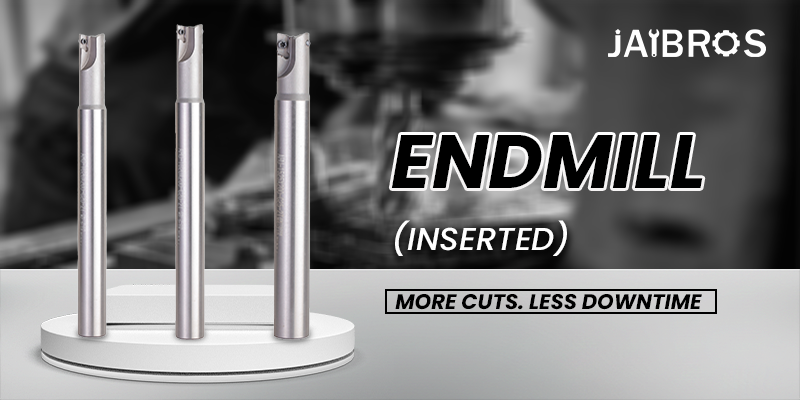
Modern CNC machining uses carbide endmill cutters for accurate cutting, smooth surface finish, long tool life, and reliable milling work.
What Is an End Mill and How It Works
An carbide endmill is a type of milling cutter used mainly on milling machines and CNC machines. It rotates at high speed and removes material using its side and bottom cutting edges. End mills can cut in different directions and are used for many operations like profiling, facing, and slot cutting.
When an end mill is made from carbide material, it becomes stronger and more wear-resistant. Carbide tools can handle higher temperature and cutting speed compared to high-speed steel tools. This is why carbide tools are mostly used in CNC machining where speed and accuracy are important.
Why Carbide Is Used for Milling Cutters
Carbide is a hard material made from tungsten carbide and cobalt. It is much harder than steel and keeps its cutting edge sharp for a long time. A Carbide endmill cutter can cut hard metals like steel, stainless steel, and cast iron without losing its shape quickly.
Carbide tools also reduce tool change time because they last longer. This improves machine productivity and reduces downtime. Because of their strength, carbide cutters can be used at higher feed rates and speeds, which helps in faster production.
Insert Milling Cutters and Their Benefits
Insert milling cutters are tools that use replaceable cutting inserts instead of a solid cutting edge. These inserts are fixed into the cutter body and can be changed when worn out. This saves cost and time because the whole tool does not need replacement.
Insert cutters are commonly used for face milling and heavy material removal. They are suitable for large jobs where high cutting force is required. Insert milling cutters are also used in CNC machine tools for roughing operations where strong cutting edges are needed.
Difference Between Solid End Mills and Insert End Mills
Solid end mills are made from a single piece of material, usually carbide. They are mainly used for finishing work and detailed cutting. Insert end mills, on the other hand, use cutting inserts and are mostly used for rough machining.
A Carbide endmill cutter in solid form gives better surface finish and accuracy. Insert end mill cutters are better for removing large amounts of material quickly. The choice depends on the job type, material, and required finish.
Role of CNC Cutting Tools in Machining
CNC cutting tools are designed to work with computer-controlled machines. These tools follow programmed paths and give exact results every time. End mills, drills, turning inserts, and milling cutters all come under CNC cutting tools.
Proper tool selection is very important in CNC machining. A tool with the wrong geometry or material can cause poor finish, tool breakage, or machine damage. Using the right Carbide endmill cutter helps in smooth cutting, less vibration, and better accuracy.
CNC Machine Tools and Tool Compatibility
CNC machine tools include milling machines, turning centers, and machining centers. Each machine needs tools that match its spindle speed, power, and tool holding system. End mills must be correctly mounted in tool holders to avoid runout and vibration.
Tool balance and proper clamping are also important. Carbide tools are rigid but can break if misused. Correct cutting parameters such as speed, feed, and depth of cut must be followed to get the best performance.
End Mill Insert Cutters in Production Work
End mill insert cutters are widely used in production machining. They are suitable for cutting large surfaces and removing excess material quickly. These tools are often used in rough milling operations before finishing is done with solid end mills.
Using insert cutters reduces overall tooling cost in high-volume work. Inserts can be changed easily, and different insert grades can be used for different materials. This makes machining more flexible and efficient.
Tool Life and Maintenance
Tool life depends on cutting speed, material hardness, coolant use, and machine condition. A Carbide endmill cutter gives long life when used correctly. Using coolant helps in reducing heat and improves tool performance.
Regular inspection of cutting edges is important. Worn tools should be replaced or re-sharpened to avoid poor surface finish and machine load. Clean tool holders and correct setup also help in extending tool life.
Applications in Different Industries
Carbide end mills are used in many industries. In automotive workshops, they are used to machine engine parts and brackets. In aerospace, they help in cutting hard alloys with precision. Tool rooms use them for mold and die making where accuracy is very important.
Because of their strength and reliability, carbide tools are preferred in modern CNC machining environments. A Carbide endmill cutter supports high productivity and consistent quality, which is needed in today’s competitive manufacturing sector.
Conclusion
Choosing the right milling cutter is key to successful machining. Carbide end mills and insert milling cutters both have their own uses. Understanding tool type, material, and machine compatibility helps in getting better results. With proper selection and use, a Carbide endmill cutter can improve surface finish, reduce machining time, and increase overall efficiency in CNC machining work.
Where Can You Get Quality Workshop Tools?
Jaibros is a reliable place for workshop and industrial tool needs because it focuses on quality, accuracy, and practical use. The platform offers a wide range of measuring and machining tools that are suitable for daily workshop work, inspection tasks, and training use. Products are clearly listed with proper details, making it easier for users to choose the right tool for their requirement. Jaibros is known for supporting machinists, technicians, and industries by providing tools that help improve measurement accuracy and work efficiency without confusion.
Frequently Asked Questions
Q1. What is a carbide end mill used for?
It is used for milling, slotting, profiling, and surface cutting in CNC machines.
Q2. Why is carbide better than HSS for CNC work?
Carbide lasts longer, cuts faster, and handles higher heat.
Q3. What is an insert milling cutter?
It is a cutter that uses replaceable cutting inserts instead of solid edges.
Q4. Can end mill insert cutters be used for finishing?
They are mainly used for roughing; solid end mills are better for finishing.
Q5. What affects the life of a milling cutter?
Cutting speed, feed rate, material type, and coolant use affect tool life.