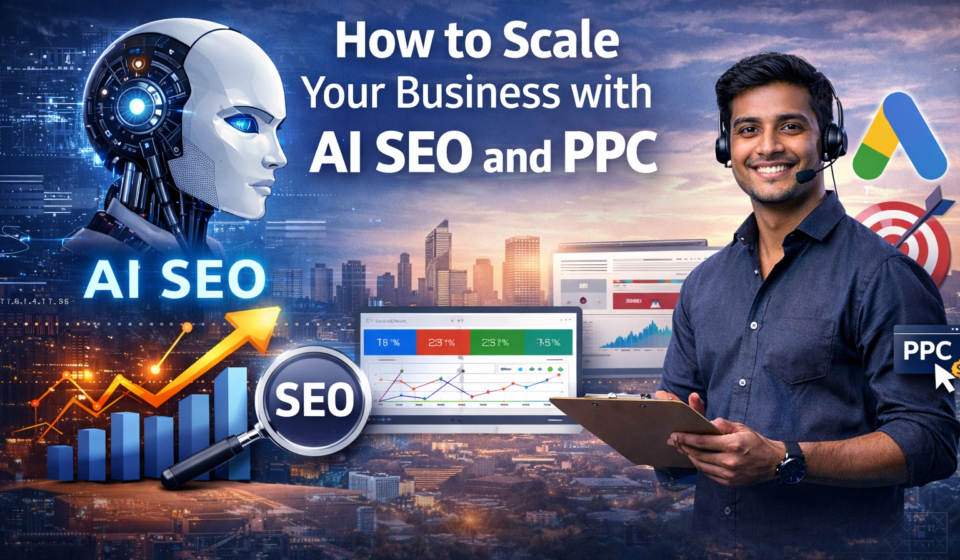

In today’s competitive digital marketplace, scaling a business requires more than just having a website or running occasional ads. Brands need a structured growth strategy powered by data, automation, and smart decision-making. This is where AI SEO and PPC (Pay-Per-Click advertising) come together as a powerful combination.
Artificial Intelligence is reshaping digital marketing. From predicting search trends to automating ad bidding, AI allows businesses to grow faster, smarter, and more efficiently. When combined with a strategic PPC campaign, AI-driven SEO creates a scalable growth engine that attracts, converts, and retains customers.
In this article, we’ll explore how businesses can scale effectively using AI SEO and PPC together.
Understanding AI SEO: Smarter Organic Growth
Search Engine Optimization has evolved far beyond traditional keyword stuffing and backlink building. Today, search engines analyze user behavior, intent, engagement signals, and content quality using complex algorithms powered by artificial intelligence.
AI SEO uses advanced tools and machine learning models to:
- Identify high-intent keywords
- Analyze competitor strategies
- Predict content trends
- Optimize content structure
- Improve technical performance
- Monitor ranking fluctuations
Instead of relying on guesswork, AI SEO uses real-time data to refine strategies continuously. This makes organic growth more predictable and scalable.
Why AI SEO Is Essential for Scaling
Scaling a business means increasing traffic and conversions without proportionally increasing costs. AI SEO supports this by:
- Targeting the right audience through intent-based keyword research
- Improving content relevance to match search behavior
- Enhancing user experience signals that boost rankings
- Reducing dependency on paid ads over time
As your organic presence grows, your cost per acquisition decreases, making growth sustainable.
PPC: Instant Visibility and Controlled Scaling
While SEO builds long-term visibility, PPC delivers immediate traffic. Pay-Per-Click advertising platforms like Google Ads allow businesses to appear at the top of search results instantly.
PPC is highly scalable because you can:
- Control daily budgets
- Target specific locations
- Focus on high-intent keywords
- Adjust campaigns based on performance
- Scale successful ads quickly
Unlike traditional advertising, PPC provides measurable results. Every click, impression, and conversion can be tracked and optimized.
How AI Enhances PPC Performance
AI plays a major role in modern PPC campaigns. Today’s advertising platforms use machine learning to optimize bids, audience targeting, and ad placements automatically.
AI-powered PPC helps in:
- Smart bidding strategies that maximize conversions
- Identifying high-performing audiences
- Automatically adjusting budgets for better ROI
- Testing multiple ad variations simultaneously
- Predicting which keywords will drive results
This level of automation allows businesses to scale campaigns efficiently without wasting ad spend.
The Real Power: Combining AI SEO and PPC
Many businesses treat SEO and PPC as separate channels. However, the real growth happens when they work together strategically.
-
PPC Data Improves SEO Strategy
PPC campaigns generate fast data about:
- Which keywords convert best
- Which ad messages attract clicks
- Which landing pages perform well
This data can be used to refine SEO content strategy. Instead of guessing which keywords to target organically, businesses can use proven PPC insights to guide SEO efforts.
-
SEO Reduces PPC Dependency
As organic rankings improve through AI SEO, businesses begin receiving consistent traffic without paying for every click. This allows companies to:
- Reduce paid ad budgets
- Reinvest in high-performing campaigns
- Improve overall profit margins
SEO builds authority, while PPC accelerates growth.
-
Better Conversion Optimization
When AI SEO and PPC direct traffic to optimized landing pages, businesses can test and refine conversion elements such as:
- Headlines
- Call-to-action buttons
- Page layouts
- Offers
PPC provides immediate testing results, and successful elements can be implemented across SEO-driven pages.
Step-by-Step Strategy to Scale with AI SEO and PPC
Here’s a practical framework businesses can follow:
Step 1: Conduct AI-Powered Keyword Research
Start by identifying high-intent keywords using AI tools. Focus on:
- Commercial intent keywords
- Problem-solving search queries
- Long-tail keywords with strong conversion potential
This ensures you attract qualified traffic.
Step 2: Launch Targeted PPC Campaigns
Run PPC campaigns on your most promising keywords. Monitor:
- Cost per click
- Conversion rate
- Quality score
- Return on ad spend
Use AI-driven bidding strategies to optimize performance automatically.
Step 3: Build SEO Content Around Winning Keywords
Take the highest-performing PPC keywords and build in-depth SEO content around them. Create:
- Blog posts
- Landing pages
- Service pages
- Case studies
Optimize content for user intent and engagement.
Step 4: Improve Technical and UX Performance
Scaling traffic without optimizing user experience can lead to wasted opportunities. Ensure:
- Fast loading speed
- Mobile responsiveness
- Clear navigation
- Simple conversion pathways
AI analytics tools can highlight user drop-off points and suggest improvements.
Step 5: Use Retargeting to Maximize Conversions
Not all visitors convert on the first visit. PPC retargeting campaigns help re-engage users who interacted with your website but didn’t take action.
This increases conversion rates and maximizes traffic value.
Benefits of Scaling with AI SEO and PPC
Businesses that integrate both strategies enjoy:
-
Predictable Growth
AI provides data-backed forecasting, reducing uncertainty in marketing decisions.
-
Lower Customer Acquisition Cost
Organic SEO reduces long-term reliance on paid traffic.
-
Faster Market Expansion
PPC allows quick entry into new markets while SEO builds authority.
-
Competitive Advantage
AI tools help identify gaps competitors are missing.
-
Improved ROI
Data-driven optimization ensures marketing budgets are used efficiently.
Common Mistakes to Avoid
Even with AI tools, scaling can fail if strategies are poorly implemented. Avoid:
- Running PPC without conversion tracking
- Targeting broad keywords without intent analysis
- Ignoring technical SEO issues
- Scaling budgets too quickly without data validation
- Neglecting landing page optimization
Sustainable growth requires balance and continuous monitoring.
The Future of AI SEO and PPC
Digital marketing is becoming increasingly automated and data-centric. Voice search, predictive analytics, and AI-driven personalization are reshaping how customers interact with brands.
Businesses that adopt AI SEO and PPC early will:
- Adapt faster to algorithm changes
- Deliver personalized experiences
- Scale campaigns with minimal manual effort
- Stay ahead of competitors
The combination of automation and strategy is the future of scalable marketing.
Final Thoughts
Scaling a business in today’s digital landscape requires a smart, integrated approach. AI SEO builds long-term authority and sustainable organic growth. PPC delivers instant traffic and measurable performance. When combined strategically, they create a powerful growth engine.
Instead of relying on one channel alone, businesses should leverage AI insights, data analytics, and automated bidding systems to make informed decisions. The synergy between SEO and PPC not only increases traffic but also improves conversions and profitability.
If your goal is sustainable expansion, higher revenue, and better marketing efficiency, AI SEO and PPC together offer the roadmap to scalable success.
Frequently Asked Questions (FAQs)
How is PPC different from SEO?
SEO focuses on improving organic search rankings over time, while PPC (Pay-Per-Click) advertising provides instant visibility through paid ads. SEO builds long-term authority, whereas PPC delivers immediate traffic and quick results. When combined, both strategies create balanced and scalable growth.
Can AI improve PPC campaign performance?
Yes, AI significantly enhances PPC campaigns. AI-powered bidding strategies automatically adjust bids based on user behavior and conversion likelihood. It also helps identify high-performing audiences, optimize ad placements, and improve return on ad spend (ROAS).
Should small businesses invest in AI SEO and PPC?
Absolutely. Small businesses can benefit greatly from AI SEO and PPC. AI tools help optimize limited budgets by targeting the right audience, while PPC generates quick leads. This combination allows small businesses to compete with larger brands more effectively.
How long does it take to see results from AI SEO?
SEO is a long-term strategy. Typically, noticeable improvements can be seen within 3 to 6 months, depending on competition and industry. However, AI-driven optimization can speed up analysis and strategic improvements, leading to more consistent growth.
Is it better to focus on SEO or PPC for scaling?
The best approach is to combine both. PPC delivers instant traffic and valuable data insights, while SEO builds sustainable organic growth. Together, they provide both short-term results and long-term stability.
How does combining AI SEO and PPC reduce marketing costs?
AI SEO reduces dependency on paid traffic over time by improving organic rankings. Meanwhile, PPC data helps refine SEO strategies to focus only on high-converting keywords. This synergy improves overall efficiency and lowers customer acquisition costs.
What industries benefit most from AI SEO and PPC?
Almost every industry can benefit, including e-commerce, SaaS, healthcare, education, finance, and local services. Any business looking for online growth and lead generation can leverage AI SEO and PPC effectively.