
Water damage has a way of escalating quickly. What starts as a small leak or a brief overflow can turn into warped materials, lingering odors, and long-term structural issues if not handled correctly. In West Covina, where homes and commercial buildings vary widely in age and construction style, understanding how proper water damage repair works can make the difference between a full recovery and recurring problems.
This article explains what happens after water damage, which steps are most critical, and how property owners can make informed decisions when restoration becomes necessary.
Why Water Damage Is Rarely “Just Surface-Level”
Water doesn’t behave politely. Once it enters a structure, it travels through porous materials like drywall, wood framing, insulation, and even concrete. Gravity pulls it downward, while capillary action allows it to move sideways and upward into areas you can’t see.
Common hidden impacts include:
- Moisture trapped behind walls or under flooring
- Swelling and weakening of wood framing
- Compromised drywall that looks fine but has lost strength
- Odors caused by lingering dampness rather than visible stains
Because of this, drying what you can see is only one part of proper restoration. The real work happens in the areas that aren’t obvious at first glance.
Common Causes of Water Damage in West Covina
While every property is different, several causes show up again and again across residential and commercial spaces in the area.
- Plumbing failures
- Aging pipes, failed fittings, and slow leaks under sinks or behind walls are some of the most common culprits. These issues often go unnoticed until damage has already spread.
- Appliance-related leaks
- Water heaters, washing machines, dishwashers, and HVAC systems can release large amounts of water in a short time when something goes wrong.
- Roof and exterior intrusion
- Cracked flashing, aging shingles, or poorly sealed windows can allow rainwater to enter, especially during seasonal storms.
- Drain backups
- Clogged or overwhelmed drainage systems can force water back into living spaces, creating both damage and sanitation concerns.
Understanding the source matters because proper repair always includes addressing the cause—not just the aftermath.
The Key Phases of Proper Water Damage Repair
Not all restoration processes are equal. High-quality water damage repair follows a structured approach designed to prevent secondary damage and long-term issues.
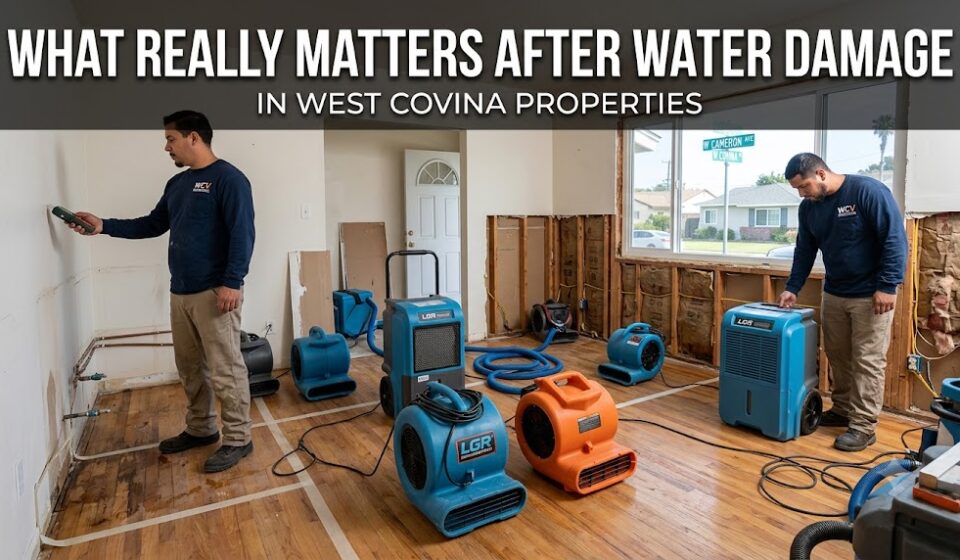
- Inspection and moisture mapping
- Professionals use moisture meters and thermal imaging to identify where water has traveled. This step determines how much material needs to be dried or removed.
- Controlled water removal
- Standing water is extracted using pumps or vacuums designed for high-volume removal. Speed matters here, as delays allow moisture to spread further.
- Drying and dehumidification
- Industrial air movers and dehumidifiers are strategically placed to dry structural materials, not just the air. This phase can take several days, depending on severity.
- Material evaluation
- Some materials can be dried and saved; others must be removed to ensure safety and structural integrity. This decision should be based on moisture readings, not guesswork.
- Repair and restoration
- Once the structure is dry, repairs begin. This can range from replacing drywall and flooring to rebuilding sections of affected areas.
For property owners looking to understand what comprehensive service includes locally, reviewing resources like water damage repair West Covina CA can help clarify what a full restoration process should involve.
Why Speed and Accuracy Both Matter
It’s often said that water damage is “time-sensitive,” but speed alone isn’t enough. Drying too aggressively without proper assessment can trap moisture or cause materials to dry unevenly, leading to cracks, warping, or future mold concerns.
Effective restoration balances:
- Fast response to limit spread
- Accurate measurements to guide drying
- Gradual moisture removal where necessary
- Verification that materials are truly dry before repairs
Skipping verification is one of the most common reasons water damage issues resurface months later.
What Property Owners Can Do Immediately
While professional restoration is essential, there are a few steps property owners can take safely before help arrives.
- Shut off the water source if possible
- Avoid using household fans unless advised (they can spread moisture incorrectly)
- Remove small personal items from wet areas
- Avoid walking on soaked flooring that may be weakened
Most importantly, resist the urge to tear out materials prematurely. Improper removal can complicate insurance documentation and increase repair costs.
Residential vs. Commercial Water Damage Considerations
The principles of water damage repair are the same, but priorities can differ.
Residential properties often focus on habitability, air quality, and protecting personal belongings.
Commercial properties may prioritize minimizing downtime, protecting inventory, and coordinating phased repairs to keep operations running.
In both cases, documentation, moisture tracking, and clear communication are essential parts of the process.
Long-Term Protection After Repairs
Once repairs are complete, it’s worth taking steps to reduce future risk:
- Schedule periodic plumbing inspections
- Replace aging supply lines before failure
- Ensure proper drainage around the property
- Address minor leaks promptly instead of monitoring them indefinitely
Water damage is often preventable, but only when small issues are taken seriously.
Final Thoughts
Water damage can feel overwhelming, especially when it disrupts daily life or business operations. The good news is that with a methodical approach—focused on proper assessment, thorough drying, and careful repair—most properties can be fully restored without lingering problems.
Whether you’re dealing with a sudden emergency or evaluating next steps after an incident, understanding the process helps you ask better questions and avoid shortcuts that lead to bigger issues later. A well-executed repair doesn’t just fix what’s visible—it protects the structure for years to come.